I tell my kids that there are no such things as “bad words,” only bad intentions, and I believe that this is mostly true. But, you know, there are exceptions to every rule, and the same is true in this case.
Because, boy, do I really just hate the “S” word. It is the actual worst.
Now, of course, you might be thinking of “stupid,” or maybe even that four-letter back-of-the-bus expletive, but neither of those terms really gets to me quite like the one I mean.
Shame.
A painful feeling of humiliation or distress caused by the consciousness of wrong or foolish behavior.
It is with shame, unlike other words or feelings, that our cheeks burn and our heads hang low. Like a stitched letter A sewn onto your garment, shame attaches itself to you and pulls down with it your claimed confidence and wavering courage. Like a leech that slurps life and joy from your core, shame has a way of chopping away your energy and effort with one swift stroke of the pen or slander of the tongue.
A word of this stature has no place in our homes or hearts, and certainly not within our schools. Yet its prints are marked in red pen and folded into neatly acceptable envelopes with averages and comments on the comparable progress of our children, sent home like clockwork every nine weeks. We wait for them, dish out dollar bills, and brag into our iMessages and Instagram images of our children holding the receipts of our expectations in the form of report cards. We are proud; we are so glad they are “ahead of” those other kids, and we accidentally heap pressure and performance-driven response in place of space for them to simply grow.
When did school become a home of shame? We invite parents back into those haunted halls where their hopes and childhood went to die decades before and expect them to return to the scene of the crime and… what… engage? Of course not. They repeat the cycle that nearly broke them, because it is commonplace, it is expected, and it is normal. What else could there even be?
With paper and pressure, we teach kids that learning is only ever hard, that they are in constant competition with peers to see which child might blossom brightest and fastest of all the rest. And we enable anxiety and depression to eat away at the beautiful wonder and joy that a child should always encounter when they step into their classroom.
So…
For every child that was placed in the “red group” or removed from their chosen elective because they didn’t score well enough.
For every child with a paper marred in red.
For every child who puts their head down instead of their chin up when asked to read aloud.
This one’s for you.
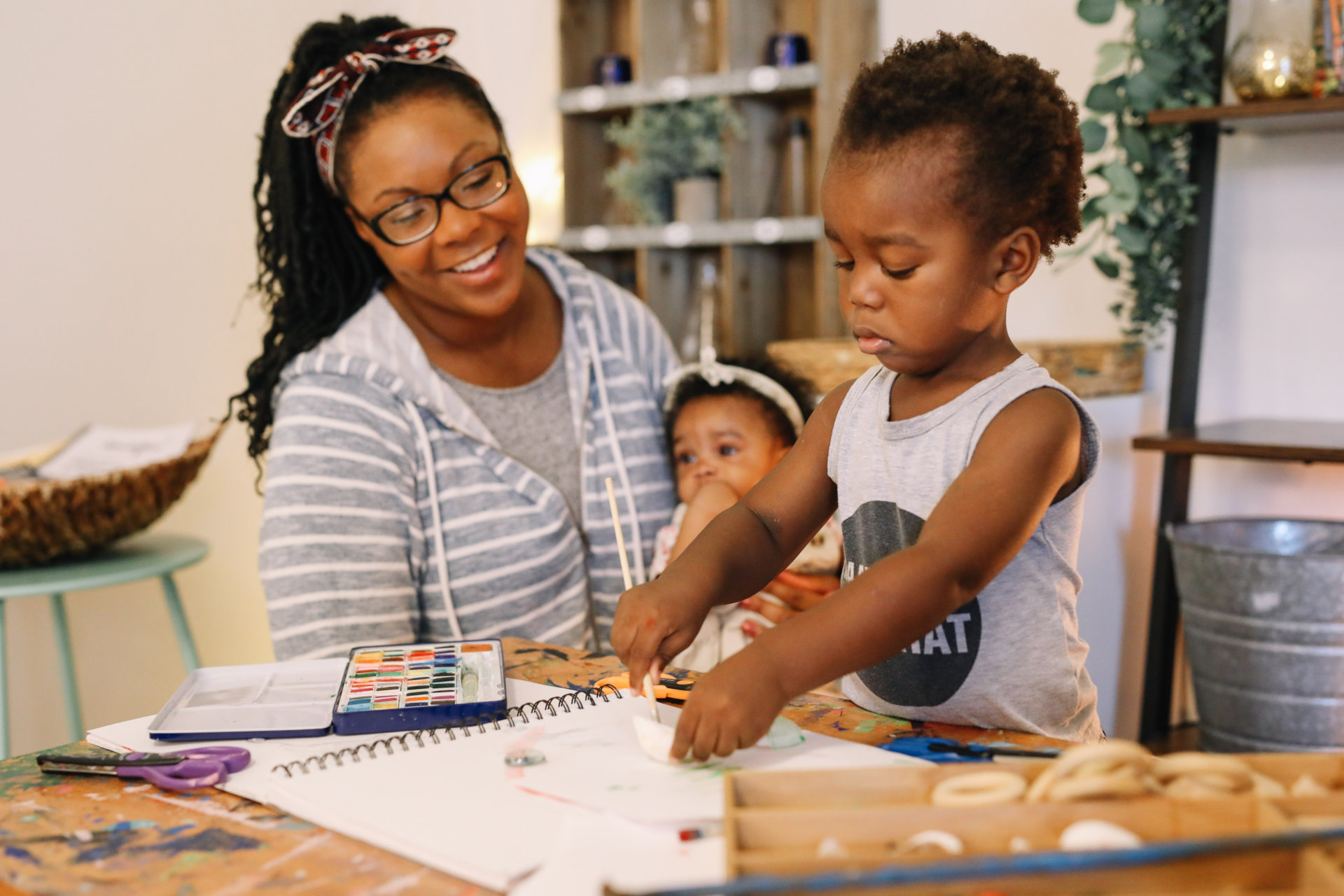
A school that is so much more than just a school… it is an idea incubator, a kitchen where learning is best served hot with curiosity and connection whipped in.
We built a school just so we could be a place where wonder replaced shame. Courage instead of comparison. And confidence as the unbidden curriculum.
Through projects, risk-taking, and mentoring, our WonderHere kids learn with their confidence intact. This is not to say that we do not challenge or correct, but these sharpening tools can be gently used to prune and push, and they were never intended to break. And certainly not to punish.
Monitoring learning along the way is inconvenient, can take a meandering path, and almost never happens when you want it to or at the exact same pace and arrival time as other kids of a certain age. Learning is a solo trajectory, each learner finding their own footing in their own time. Setting a learning environment so that shame is evicted invites kids to actually try a thing without fear that they aren’t good enough, quick enough, or similar to other kids who might excel in school while they are simply figuring themselves out.
Our children are trained early on that if they do not measure up, they are behind. Their academics are riddled with comparison and graded through an arbitrary system for averaging things that quite literally does not communicate the data you hope it would in a linear way that allows repair, while their personhood is completely disregarded.
It is shameful. But lucky for us, we get to do things differently within our walls… or, rather, without walls in most cases entirely.
Clearly, I have lots of feelings about school and shame and education in general. I have dedicated my career to creating learning environments that respect the child rather than deal in politics. So, within this section of my blog, you’ll hear all about that work, how it’s going, and what’s next. Thanks for reading, and stay tuned. I’ve got lots and lots more to say about progress monitoring and how we can do it differently.